
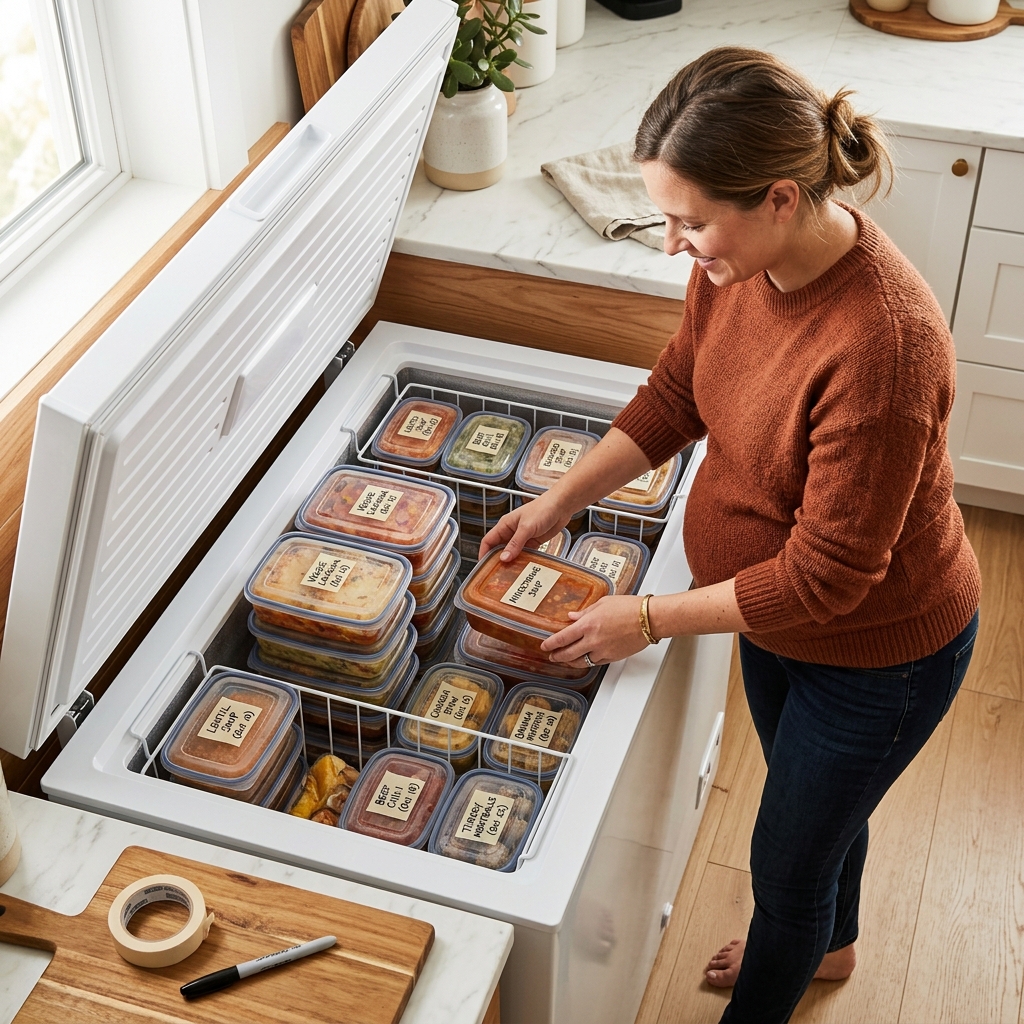

According to the American College of Obstetricians and Gynecologists, a new mother’s caloric needs increase by 450–500 calories per day during breastfeeding, yet 87% of postpartum women report skipping at least one meal daily during the first six weeks after birth. Prepping freezer meals for postpartum recovery is the single most effective strategy to ensure you stay nourished when sleep deprivation and round-the-clock newborn care make cooking from scratch nearly impossible.
The concept is simple: during the final weeks of pregnancy, you batch-cook nutrient-dense meals, portion them into freezer-safe containers, and stock your freezer with 4–6 weeks of ready-to-reheat food. Done right, this eliminates the daily “what’s for dinner?” stress entirely and gives your body the iron, protein, and healthy fats it desperately needs for tissue repair, hormone regulation, and milk production.
Key Takeaways
- Start your postpartum freezer prep meal plan around week 30 of pregnancy — early enough to avoid third-trimester fatigue but close enough to stay motivated.
- Aim to freeze 40–60 individual portions covering breakfasts, lunches, dinners, and snacks to sustain a family of two for approximately 4–6 weeks.
- Prioritize meals rich in iron, protein, omega-3 fatty acids, and fiber — the four nutrients most critical for postpartum healing and lactation support.
Why Prepping Freezer Meals for Postpartum Matters More Than You Think
Postpartum recovery is one of the most metabolically demanding periods in a woman’s life. Your body is simultaneously healing from childbirth (whether vaginal or cesarean), regulating wildly fluctuating hormones, and — if breastfeeding — manufacturing up to 25 ounces of milk per day. Each of these processes requires significant caloric and micronutrient input.
Without adequate nutrition, recovery slows dramatically. Iron-deficiency anemia (affecting up to 22% of postpartum women according to a PubMed review) causes debilitating fatigue, while inadequate protein intake delays wound healing. Freezer friendly meals postpartum solve this by removing the barrier between you and a hot, balanced meal — the barrier being the energy and time to cook it.
The psychological benefits are equally powerful. Knowing your freezer is stocked eliminates decision fatigue during a period when your cognitive bandwidth is already stretched thin by sleep deprivation and the learning curve of caring for a newborn.
When to Start Your Postpartum Freezer Prep Meal Plan
The ideal window for prepping freezer meals for postpartum is between weeks 28 and 35 of pregnancy. Here is a practical timeline that prevents both procrastination and burnout:
💡 Pro Tip
Recruit your partner, a family member, or a friend for each cooking session. Having a second pair of hands cuts prep time in half and transforms a chore into a bonding activity. Many couples report that cooking sessions became some of their favorite pre-baby memories.
The 25 Best Freezer Meals for Postpartum Recovery
Not all meals freeze equally well. The recipes below were specifically selected because they (a) maintain texture and flavor after freezing and reheating, (b) are rich in the nutrients most critical for postpartum healing, and (c) can be eaten one-handed while holding a baby.
Soups, Stews, and Broths (The Gold Standard)
Liquid-based meals are the undisputed champions of postpartum freezer cooking. They are hydrating, easy to digest during those early days when your GI tract is still recovering, and they reheat perfectly in the microwave or on the stovetop.
- Hearty Lentil and Spinach Soup — Loaded with iron (6.6 mg per cup of lentils) and folate. Freezes for up to 3 months.
- Chicken and Root Vegetable Stew — Rich in protein and zinc for wound healing. Use bone-in thighs for maximum flavor.
- Slow-Cooker Beef and Barley Soup — A powerhouse of iron and B12, critical for energy restoration.
- Butternut Squash and Ginger Soup — Anti-inflammatory ginger supports digestion. Purees beautifully for smooth texture.
- Concentrated Bone Broth — Freeze in ice cube trays. Add to any dish for an instant collagen and mineral boost.
Casseroles and Pasta Bakes (One-Pan Comfort)
These meals are the backbone of any postpartum freezer prep meal plan. They are calorie-dense, which is exactly what a recovering mother needs, and they can serve two to four people per batch.
- Whole-Wheat Lasagna with Turkey and Spinach — Swap traditional beef for ground turkey and layer in iron-rich spinach.
- Chicken Enchilada Casserole — Use corn tortillas for a gluten-free option. Top with avocado after reheating for healthy fats.
- Baked Ziti with Italian Sausage — A crowd-pleasing classic. Freeze in foil pans for easy oven-to-table reheating.
- Sweet Potato and Black Bean Enchiladas — Vegetarian-friendly, fiber-packed, and naturally gluten-free.
- Shepherd’s Pie with Cauliflower Mash — Lower-carb alternative to traditional mashed potato topping while still being warm and filling.
Versatile Protein Mains
Pre-cooked, individually portioned proteins are the secret weapon for assembling quick meals from whatever else you have on hand — rice, tortillas, salad greens, or bread.
- Slow-Cooker Shredded Chicken — Season with cumin and lime for taco bowls, or Italian herbs for sandwiches.
- Beef Carnitas — Rich in iron and incredibly versatile. Freeze in 1-cup portions.
- Turkey Meatballs with Hidden Vegetables — Grate zucchini and carrots directly into the meat mixture. Kids love them too.
- Salmon Patties — Excellent source of omega-3 DHA, which supports both maternal brain health and infant development through breast milk.
- Marinated Chicken Thighs — Freeze raw in marinade. Thaw and bake when ready — minimal hands-on time.
Breakfasts (The Most Skipped Meal)
Research from the CDC’s National Center for Health Statistics shows that breakfast-skipping is directly correlated with lower energy levels and increased postpartum mood disturbances. These grab-and-go options eliminate excuses.
- Breakfast Burritos — Scrambled eggs, black beans, cheese, and roasted peppers wrapped in a tortilla. Reheat in 90 seconds.
- Egg Muffin Cups — Whisk eggs with spinach, feta, and sun-dried tomatoes. Bake in a muffin tin and freeze individually.
- Baked Oatmeal Bars — Oats, mashed banana, walnuts, and blueberries. Naturally sweetened and rich in fiber.
- Smoothie Freezer Packs — Pre-portion spinach, frozen berries, banana, flaxseed, and protein powder into bags. Add milk and blend.
- Whole-Grain Pancake Stacks — Make a triple batch, layer with parchment paper, and freeze. Toast to reheat.
Snacks and Energy Boosters
- Lactation Energy Bites — Oats, brewer’s yeast, flaxseed, peanut butter, and dark chocolate chips. Supports milk supply.
- Banana-Oat Muffins — Only 5 ingredients. Naturally sweetened by ripe bananas.
- Frozen Yogurt Bark — Spread Greek yogurt on parchment, top with berries and granola, freeze, and snap into pieces.
- Homemade Granola Bars — Customize with your favorite nuts and seeds. Cut before freezing for easy portioning.
- Pumpkin Spice Protein Balls — Canned pumpkin, oats, maple syrup, and vanilla protein powder. High fiber and iron.
Essential Nutrients to Prioritize in Every Meal
When selecting which recipes to include in your best freezer meals for postpartum rotation, use this nutrient framework as your filter. Every single meal you freeze should hit at least two of these four pillars:
Step-by-Step: How to Prep, Package, and Freeze Like a Pro
The difference between a freezer full of inedible, freezer-burned mush and a freezer full of restaurant-quality meals comes down to technique. Follow these five rules religiously:
1. Cool completely before packaging. Placing hot food in the freezer raises the internal temperature, which can partially thaw surrounding items and create dangerous bacterial growth zones. Let all cooked food reach room temperature (within 2 hours per USDA guidelines) before sealing.
2. Remove all air. Air is the enemy. For freezer bags, use the “water displacement method”: seal the bag 90% closed, slowly submerge it in a bowl of water (the pressure pushes air out), then seal the last inch. For rigid containers, press plastic wrap directly onto the food surface before closing the lid.
3. Portion for purpose. Freeze single-serving or two-serving portions rather than entire casseroles. This dramatically reduces thaw time and eliminates waste. Use silicone muffin molds for sauces and broths.
4. Label obsessively. Write the meal name, date frozen, and reheating instructions on every single container with a permanent marker. Your sleep-deprived future self will thank you.
5. Organize by category. Dedicate freezer zones: one shelf for breakfasts, one for mains, one for soups, one for snacks. This “grocery store” layout makes grabbing the right meal effortless.
⚠️ Foods That Do NOT Freeze Well
Avoid freezing meals containing raw lettuce, cucumber, raw potatoes (they turn grainy), mayonnaise-based dressings (they separate), or dishes with a high water content like watermelon or fresh tomato salsa. Dairy-based sauces can be frozen but may require vigorous stirring after reheating to restore their smooth texture.
Your Postpartum Freezer Meal Grocery Shopping List
Here is a consolidated shopping list designed to cover the 25 recipes outlined above. Adjust quantities based on how many portions you plan to make:
Proteins
- 5 lbs boneless, skinless chicken thighs
- 3 lbs ground turkey
- 2 lbs beef chuck roast (for stews and carnitas)
- 1 lb Italian sausage
- 2 cans wild-caught salmon
- 3 dozen eggs
- 4 cans black beans
- 2 lbs dried lentils
Grains and Starches
- 2 lbs rolled oats
- 1 box whole-wheat lasagna noodles
- 1 box whole-grain penne (for baked ziti)
- 2 lbs quinoa or brown rice
- 1 pack corn tortillas
- 1 pack large flour tortillas (for burritos)
Vegetables and Fruits
- 3 lbs fresh spinach
- 4 large sweet potatoes
- 2 butternut squash
- 2 lbs carrots
- 1 head cauliflower
- 3 zucchini
- Frozen berry medley (2 lb bag)
- 6 ripe bananas
Dairy and Fats
- 2 lbs shredded cheese (cheddar and mozzarella)
- 32 oz Greek yogurt
- 1 jar natural peanut butter
- Extra virgin olive oil
- 1 cup walnuts
- Ground flaxseed
Common Mistakes That Ruin Postpartum Freezer Meals
Even experienced home cooks make these errors. Avoid them and your freezer stash will taste as good in month two as it did on day one:
Overcooking pasta and grains before freezing. When you reheat, the pasta will cook further. Always undercook noodles by 2 minutes (al dente minus) before assembling casseroles for the freezer. This prevents mushy, unappetizing textures.
Freezing too much of the same thing. Variety prevents “freezer fatigue.” If you make 20 portions of the same chili, you will stop wanting to eat it by week two. Aim for no more than 4 portions of any single recipe.
Ignoring one-handed eating. During the newborn phase, you will frequently eat while holding, feeding, or rocking your baby. Prioritize meals that can be eaten with a spoon or fork only — no knife required. Burritos, soups, meatballs, and pre-cut casserole portions are ideal.
Skipping breakfasts and snacks. Most people only freeze dinners. But breakfast and snacks are the meals most likely to be skipped postpartum. A well-stocked snack supply of energy bites and muffins can be the difference between surviving and thriving.
Frequently Asked Questions
How far in advance can I start prepping freezer meals for postpartum?
Most meals freeze safely for up to 3 months without losing quality. Starting at week 28–30 of pregnancy gives you a comfortable 8–12 week window before your due date, ensuring your food is fresh and well within safe freezer storage limits when baby arrives.
How many freezer meals should I prepare for postpartum recovery?
Aim for 40–60 individual portions to cover roughly 4–6 weeks of meals and snacks. This breaks down to approximately 2 main meals and 1–2 snacks per day. If your partner is also eating from the freezer, double the dinner portions accordingly.
Can I freeze meals in glass containers?
Yes, but only if they are specifically labeled “freezer-safe.” Regular glass can shatter when exposed to rapid temperature changes. Leave at least 1 inch of headspace in glass containers because liquids expand when frozen. Silicone lids are preferable to metal ones, as they create a tighter seal.
What is the best way to reheat frozen postpartum meals?
For soups and stews, transfer to the refrigerator the night before to thaw, then reheat on the stovetop over medium heat. For casseroles, reheat directly from frozen in a 350°F (175°C) oven for 30–45 minutes covered with foil. Microwave works for single portions — use 50% power in 2-minute intervals to ensure even heating.
Are freezer meals safe for breastfeeding mothers?
Absolutely. Frozen meals are just as nutritious as fresh meals because freezing preserves most vitamins and minerals. Focus on including galactagogue-friendly ingredients like oats, flaxseed, and brewer’s yeast, which may support milk supply. Avoid excessive sage, peppermint, and parsley, which some lactation consultants advise can reduce milk production.
Stocking your freezer before baby arrives is not just meal prep — it is an act of self-care that pays dividends every single day of your recovery. The hours you invest now in shopping, cooking, and packaging will return to you tenfold in the form of hot, nourishing meals that you can access in under five minutes during the most demanding weeks of your life. Start your first cooking session this weekend, enlist your partner or a friend, and give your future postpartum self the gift of being well-fed. Your body, your mood, and your baby will all benefit.
Get our latest guides, news, and insights highlighted in your Google Search & AI Overviews.


