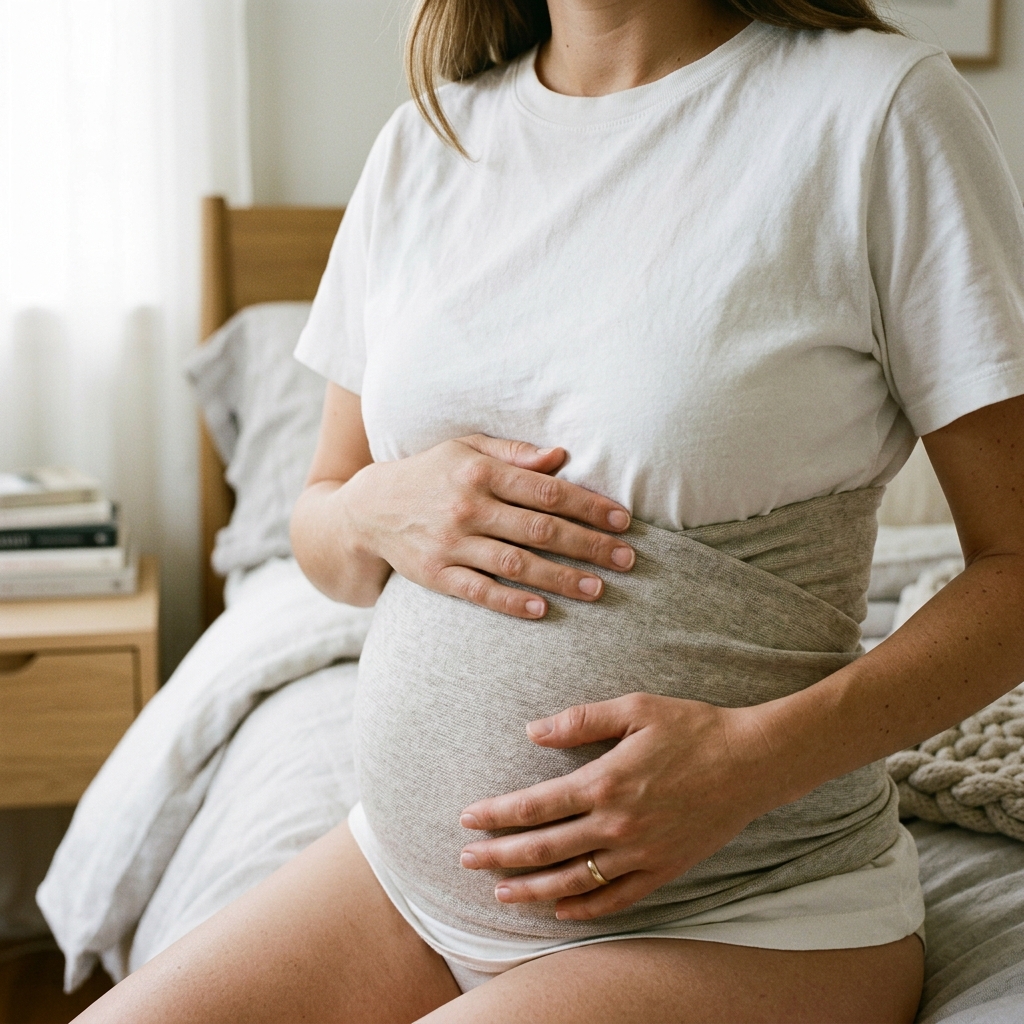

The tradition of wrapping a mother’s abdomen after childbirth spans centuries and cultures, from the Malaysian bengkung bind to the Latin American faja. Today, modern postpartum belly wraps are heavily marketed to new mothers with promises of “snapping back” and instantly shrinking the waistline. But beneath the aggressive marketing, does postpartum belly binding actually work, and more importantly, is it safe for a healing body?
The medical consensus is nuanced. While an abdominal binder is not a magic corset that melts away pregnancy weight or permanently fuses separated abdominal muscles, it can offer substantial functional benefits. For many women — particularly those recovering from a Cesarean section — a properly fitted wrap provides crucial core stabilization, reduces lower back pain, and makes the physical transition into motherhood significantly more comfortable. However, wearing the wrong type of binder, or wearing it too tightly, can actually damage your pelvic floor and delay your recovery.
Key Takeaways
- A postpartum belly wrap provides excellent physical support for a weakened core and lower back, but it will not cause you to lose weight or magically cure diastasis recti.
- They are especially beneficial after a C-section, as they act as a splint to protect the incision during coughing, laughing, and movement.
- Never use a rigid “waist trainer” or corset postpartum. Binders should provide gentle compression, not forceful restriction.
What Exactly is Postpartum Belly Binding?
Postpartum belly binding involves wrapping the abdomen tightly (but comfortably) in a piece of cloth or an elasticized belt. During pregnancy, your abdominal muscles stretch dramatically, and your internal organs shift to make room for the baby. After delivery, the sudden lack of internal pressure can leave you feeling “hollow” or as though your organs are unsupported.
A medical-grade abdominal binder acts as a temporary external splint. It provides 360-degree compression around the torso, gently holding the abdominal wall in place while your muscles, ligaments, and skin begin their natural retraction process.
Does Belly Binding Actually Work? (The Medical Consensus)
Whether belly binding “works” depends entirely on your definition of the word. If your goal is aesthetic weight loss, you will be disappointed. However, if your goal is functional recovery, physical therapists and OB-GYNs widely acknowledge the benefits.
What a Belly Wrap CAN Do:
- Stabilize the Core: It provides artificial tension to the abdominal wall, which helps you maintain an upright posture while nursing or carrying your baby.
- Reduce Back Pain: By supporting the front of the core, the binder relieves the lower back muscles, which are often overcompensating for the weakened abdominals.
- Promote Mobility: Many women find that wearing a wrap makes it significantly easier to walk, stand up, and roll out of bed in the early postpartum days.
What a Belly Wrap CANNOT Do:
- Cause Weight Loss: Compression garments do not burn fat or speed up your metabolism.
- Heal Diastasis Recti: While a wrap can hold separated abdominal muscles together temporarily, it does not heal the connective tissue. Healing diastasis recti requires targeted transverse abdominis exercises.
- Permanently Shape the Waist: Any waist-slimming effect is strictly temporary while the garment is being worn.
Belly Binding After a C-Section: What You Need to Know
For mothers recovering from a Cesarean delivery, an abdominal binder is often provided by the hospital before discharge. After major abdominal surgery, the incision site is incredibly vulnerable.
A wrap acts as a physical barrier that protects the incision from being rubbed by clothing or accidentally kicked by a nursing baby. More importantly, it provides counter-pressure. Simple actions like laughing, coughing, or sneezing can cause excruciating pain after a C-section because they spike intra-abdominal pressure. A binder holds the tissue firmly in place, significantly reducing pain during these movements.
💡 Pro Tip for C-Section Mamas
Do not let the binder rub directly against your healing incision. Always wear a seamless, high-waisted cotton brief or a soft camisole underneath the wrap to prevent friction, irritation, and potential infection.
Safety Risks: The Danger of Waist Trainers
The most critical mistake new mothers make is confusing a postpartum abdominal binder with a waist trainer or corset. You should never use a rigid waist trainer postpartum.
Medical binders are made from breathable, flexible elastic that moves with your body. Waist trainers are typically made with rigid boning (steel or hard plastic) designed to aggressively cinch the waist. Using a rigid corset postpartum is dangerous for several reasons:
- Pelvic Floor Damage: If you squeeze the middle of your abdomen too tightly, that internal pressure has to go somewhere. It gets forced downward directly onto your healing pelvic floor, which can cause or worsen pelvic organ prolapse and incontinence.
- Impaired Breathing: Rigid binders restrict the diaphragm, forcing you to take shallow chest breaths rather than deep, restorative belly breaths.
- Muscle Atrophy: If you rely on a rigid corset 24/7, your core muscles will effectively “go to sleep” because the garment is doing all the work. Your muscles will weaken rather than heal.
Timeline: When to Start and How Long to Wear It
Proper timing is essential to ensure the wrap aids recovery rather than hindering it.
When Should You Stop Wearing It?
An abdominal binder is a temporary tool. By 6 to 8 weeks postpartum, you should begin weaning yourself off the wrap. At this stage, natural healing has progressed, and you need to rely on your own core muscles to rebuild strength. Continuing to wear a binder all day for months on end will result in core muscle atrophy.
⚠️ Warning Signs to Stop Binding
Remove your wrap immediately if you experience shortness of breath, an increase in vaginal bleeding (lochia), a sensation of heavy pressure in your vagina/pelvis, or if the wrap causes pain or friction over your C-section incision.
Frequently Asked Questions
Can I sleep in my postpartum belly wrap?
No, you should generally not sleep in your postpartum belly wrap unless specifically instructed to do so by your doctor for C-section stabilization. Taking it off at night allows your skin to breathe, ensures unobstructed blood circulation, and gives your abdominal muscles a break from the continuous compression.
Does belly binding help with diastasis recti?
Belly binding does not cure or heal diastasis recti (abdominal separation). While it can gently support the tissue and provide a physical cue to engage your core, the only way to actually close the gap and restore tension to the linea alba is through targeted deep core exercises.
How tight should a postpartum belly wrap be?
The wrap should feel like a firm, supportive hug. It should provide gentle compression but never restrict your ability to take a deep, full belly breath. If it pinches, causes bulging above or below the wrap, or forces you to breathe shallowly into your chest, it is too tight.
When is it too late to start postpartum belly binding?
While the most dramatic functional benefits are felt in the first 6 weeks postpartum, you can start wearing a support wrap later if you are still experiencing core instability or lower back pain. However, after the 8-week mark, your primary focus should transition from passive support (binding) to active rehabilitation (physical therapy exercises).
Are traditional wraps better than modern velcro belts?
Traditional cloth wraps (like the bengkung) offer highly customized, full-torso coverage that prevents rolling or pinching, but they are time-consuming to put on and take off. Modern velcro belts are incredibly convenient for bathroom breaks and nursing, but they can sometimes bunch up. The “best” wrap is simply the one you find comfortable enough to wear consistently.
Postpartum belly binding is a wonderful tool for supporting a body that has just accomplished the monumental task of growing and birthing a human. When used correctly — as a gentle splint rather than an aggressive waist trainer — it can alleviate pain, improve posture, and provide a sense of physical security during those vulnerable early weeks. Listen to your body, prioritize comfort over compression, and remember that true core recovery comes from time, patience, and mindful movement.
Get our latest guides, news, and insights highlighted in your Google Search & AI Overviews.