
There is a running joke among mothers that giving birth is only the first hurdle; the second hurdle is taking the first postpartum poop. For many women, the anxiety surrounding this inevitable trip to the bathroom is worse than the fear of labor itself. If you recently delivered a baby, the idea of bearing down and pushing anything else out of your body — especially if you have perineal stitches, tears, or hemorrhoids — can feel genuinely terrifying.
The good news is that the anticipation is almost always worse than the reality. Postpartum constipation is incredibly common due to a combination of shifting hormones, pain medications, and the sheer physical trauma your pelvic floor just endured. By understanding the timeline of when to expect your first bowel movement and utilizing a few simple, proven strategies, you can make the process smooth, painless, and completely safe for your healing body.
Key Takeaways
- It is completely normal not to have a bowel movement for two to five days after giving birth.
- The number one rule of postpartum pooping is: Do not strain. Use a footstool to elevate your knees and breathe deeply.
- It is incredibly rare to “pop” or rip your perineal stitches while taking a poop. Keep your stool soft, and your stitches will be perfectly safe.
When to Expect Your First Postpartum Bowel Movement
If you have been home from the hospital for two days and still haven’t had the urge to go, do not panic. The timeline for your first postpartum poop varies wildly from person to person.
Most healthcare providers consider it normal to have your first bowel movement anywhere from two to five days after delivery. Some women may go on the exact same day they deliver, while others (especially those who had a C-section or required heavy pain medication) may not go for up to a week.
If you pass the 5-day mark without a bowel movement, or if you are experiencing severe abdominal cramping and bloating without the ability to pass gas, you should contact your OB-GYN. They may prescribe a gentle laxative or suppository to get things moving safely.
Why Is It So Hard to Poop After Giving Birth?
Postpartum constipation is caused by a “perfect storm” of physical, chemical, and psychological factors:
- An Empty Digestive Tract: You likely did not eat much (or were not allowed to eat) during active labor. Furthermore, it is very common for women to completely empty their bowels during the pushing phase of delivery. It simply takes a few days for your digestive tract to fill back up.
- Pain Medications: Narcotics and opioids (often given after a C-section or for severe perineal tearing) are notorious for slowing down the digestive tract and causing severe constipation. Epidurals can also temporarily slow bowel function.
- Dehydration: Producing breast milk requires a massive amount of water. If you are not drinking enough, your body will pull moisture from your colon, leading to hard, dry stools that are difficult to pass.
- Iron Supplements: If you lost a significant amount of blood during birth, your doctor may have prescribed iron supplements, which are a major culprit behind dark, hard, constipated stools.
- Psychological Fear: Your brain is highly connected to your gut. If you are terrified of the pain, you will subconsciously tense your pelvic floor muscles, making it physically impossible to pass a bowel movement.
Will Pooping Rip My Stitches? (The #1 Fear)
This is the most common fear among women who had a vaginal delivery with an episiotomy or tearing. It feels as though any downward pressure will cause your stitches to burst open.
You can take a deep breath: It is incredibly unlikely that you will tear your stitches by going to the bathroom.
The sutures used for perineal repairs are specifically designed to withstand the stretching and pressure of everyday bodily functions. The tissue in that area is robust. The only danger to your stitches is extreme, forceful straining against a hard, impacted stool. As long as you keep your stool soft and avoid holding your breath to bear down, your stitches will heal perfectly fine.
5 Proven Tips to Make Your First Postpartum Poop Easier
Do not wait until you are sitting on the toilet in a panic. Be proactive about your digestive health the moment you deliver your baby. Use these five strategies to ensure a smooth, painless bathroom trip.
1. Take the Stool Softeners
If the nurses at the hospital offer you a little red or orange pill (like Colace or docusate sodium), take it. Stool softeners are not the same as laxatives. They do not force your body to go; they simply draw water into the bowel to keep the stool soft and mushy, so it glides out without requiring you to push. Continue taking them at home for the first few weeks as directed by your doctor.
2. Use a Footstool (The Squatty Potty Method)
The modern toilet puts our bodies at a 90-degree angle, which actually kinks the colon and requires you to strain. When you feel the urge to go, place a small step stool (or a stack of thick books) under your feet. Raising your knees above your hips straightens out the anorectal angle, allowing gravity to do the work and fully relaxing your pelvic floor.
3. The “Breathe and Bulge” Technique
Never hold your breath and push (the Valsalva maneuver). This spikes pressure in your pelvic floor and exacerbates hemorrhoids. Instead, use the “Breathe and Bulge” technique. Inhale deeply so your belly expands. As you exhale, make a low “moo” or “grrr” sound. This naturally creates gentle, downward internal pressure without straining your perineum.
4. Support Your Perineum
If you have stitches and feel vulnerable, you can physically support the area to give yourself peace of mind. Fold a clean maternity pad or a wad of toilet paper, press it gently but firmly against your perineum (the space between your vagina and anus), and hold it there while you have a bowel movement. The counter-pressure feels incredibly securing.
5. Hydrate and Eat Prunes
Water is your best friend. Aim for at least 100 ounces a day. Pair your water intake with soluble fiber. Prunes and prune juice are famous for a reason — they contain sorbitol, a natural sugar alcohol that pulls water into the gut and acts as a mild, natural laxative.
💡 Pro Tip: The Peri Bottle
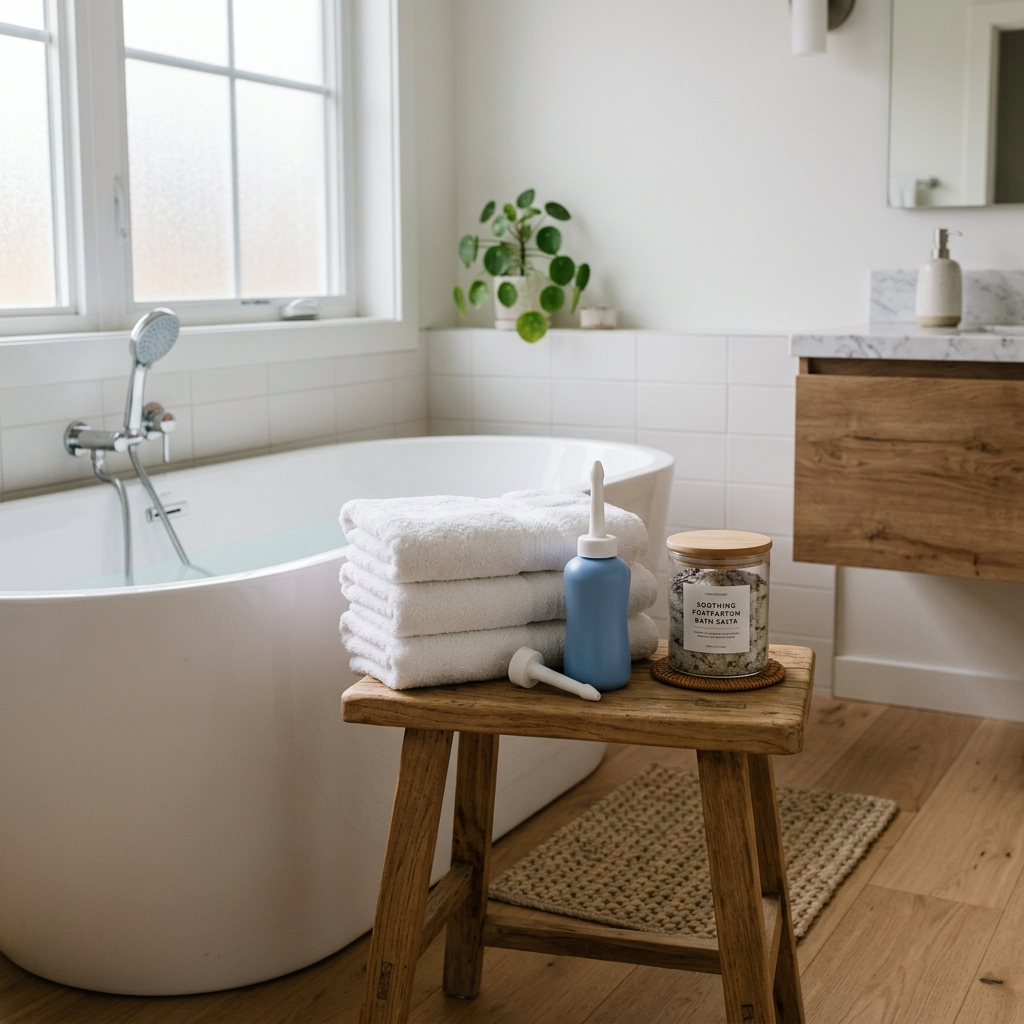
Do not use dry toilet paper to wipe after your first few bowel movements. The friction will irritate your swollen tissue and hemorrhoids. Instead, fill your peri bottle with warm water, spray the area clean from front to back, and gently pat dry with a clean witch hazel pad or soft cloth.
What About Hemorrhoids?
Hemorrhoids (swollen veins in the lower rectum) are incredibly common after pushing a baby out. They can make sitting and pooping feel like you are passing glass. To manage them:
- Use Witch Hazel: Line your maternity pad with cooling witch hazel pads (like Tucks) to reduce swelling.
- Sitz Baths: Soak your bottom in a shallow tub of warm water for 10-15 minutes, three times a day. This increases blood flow and shrinks the hemorrhoids.
- Do Not Linger: Do not sit on the toilet scrolling on your phone. Sitting on the open toilet seat causes blood to pool in your rectal veins, making hemorrhoids significantly worse. If you do not go within 5 minutes, get up and walk away.
Frequently Asked Questions
Should I take a laxative if I haven’t pooped after giving birth?
You should stick to stool softeners initially. Harsh stimulant laxatives can cause severe abdominal cramping and sudden diarrhea, which is the last thing you want when you have perineal stitches. If it has been 5 days, call your doctor before taking a laxative; they may recommend a gentle osmotic laxative like Miralax.
Is it normal to bleed from the rectum postpartum?
A small amount of bright red blood on the toilet paper is very common and is almost always caused by a hemorrhoid or a small anal fissure (a tiny tear from passing a hard stool). However, if the blood is dark, profuse, or mixing with your stool, contact your doctor immediately.
How do you poop after a C-section without hurting your incision?
Hold a firm pillow tightly against your abdominal incision while you sit on the toilet. This “splinting” technique provides counter-pressure and prevents your abdominal muscles from pulling painfully if you need to bear down or cough.
Can breastfeeding cause constipation?
Breastfeeding itself doesn’t cause constipation, but it demands a massive amount of fluid from your body. If you do not increase your water intake to compensate for milk production, your body will become dehydrated, leading to dry, hard stools.
What foods should I avoid to prevent postpartum constipation?
Avoid highly processed foods, massive amounts of dairy (like blocks of cheese), and refined carbohydrates (like white bread and pastries) in the early postpartum days. These foods lack fiber and slow down digestion. Stick to oats, beans, fruits, and leafy greens.
The anxiety surrounding the first postpartum poop is a universal rite of passage for mothers. While the fear is entirely valid, your body was designed to handle this. Take your stool softeners religiously, elevate your feet, and give yourself grace and time. Before you know it, this daunting milestone will be just another completed step in your postpartum healing journey.
Get our latest guides, news, and insights highlighted in your Google Search & AI Overviews.